


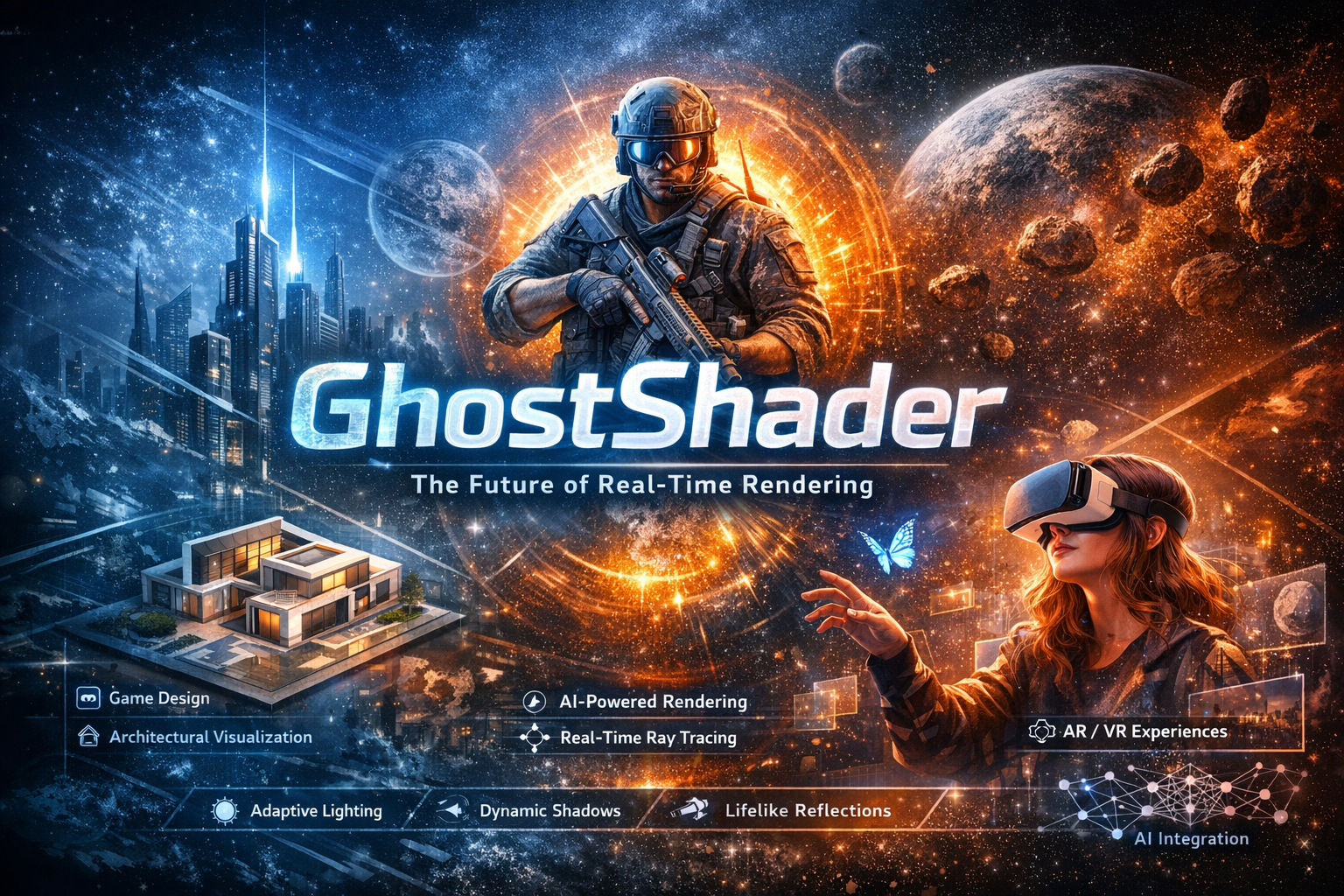
In today’s rapidly evolving digital design landscape, technologies like GhostShader are reshaping how creators approach realism and performance. It bridges the gap between artistic creativity and computational efficiency, allowing designers to build immersive worlds that feel lifelike and responsive. Unlike traditional shaders that rely on static lighting, GhostShader processes visuals dynamically, adapting to every shift in motion and light. Its balance of precision, realism, and speed makes it one of the most transformative rendering tools of the modern era. From interactive 3D environments to cinematic visual effects, this innovative approach ensures that every detail reacts naturally to context — creating true digital authenticity.
How GhostShader Works Behind the Scenes
The magic of GhostShader lies in its ability to simulate real-world light behavior in real time. Rather than pre-rendering shadows and reflections, it calculates these effects dynamically, adjusting as the scene evolves. The technology combines ray tracing, light diffusion, and material reflection algorithms to enhance depth and texture fidelity. Every pixel interacts intelligently with surrounding elements, producing smoother gradients, sharper shadows, and naturally diffused highlights.
In addition to its visual performance, GhostShader is optimized for hardware efficiency. Its intelligent rendering pipeline distributes GPU load evenly, preventing performance drops while maintaining high-quality output. This makes it suitable for both AAA gaming productions and smaller creative projects. Developers appreciate how it integrates with existing engines like Unreal and Unity, reducing workflow complexity while improving rendering realism.
Applications Across Industries
GhostShader has become an essential tool across multiple creative industries. In gaming, it enhances environments by introducing fluid shadows, natural reflections, and weather-based lighting effects that shift dynamically during gameplay. Architectural designers use it to visualize how sunlight interacts with building materials at different times of day. The film and animation industries leverage GhostShader for real-time previews of scenes that once took hours to render traditionally.
Its use in virtual and augmented reality is also expanding. Realistic lighting and texture responses are critical in immersive experiences, and this technology helps bridge the gap between simulation and reality. Whether it’s in advertising, simulation training, or product visualization, GhostShader helps creators build experiences that engage the audience visually and emotionally.
Key Benefits of GhostShader
One of the main reasons professionals are turning to GhostShader is its combination of realism and adaptability. It doesn’t simply enhance graphics — it optimizes them for performance and consistency. Here are some notable advantages:
- Real-time rendering: Lighting, shadows, and reflections update instantly as scenes change.
- Cross-platform efficiency: Works seamlessly on PC, console, and mobile devices.
- AI-driven optimization: Automatically adjusts visual settings to balance performance and quality.
- Dynamic realism: Adds true-to-life depth, contrast, and material authenticity.
- Custom control: Creators can modify parameters like glow, softness, and ambient tone for unique effects.
Through these innovations, GhostShader empowers designers to achieve cinematic results without sacrificing speed or flexibility.
Challenges and Limitations
Despite its strengths, GhostShader has a few challenges. Because it performs advanced real-time calculations, it requires modern hardware with strong GPU capabilities. On older systems, performance may decline, especially in complex scenes. Its wide range of settings can also be intimidating for beginners unfamiliar with rendering principles.
However, ongoing updates and community support are making the technology more accessible. With improved documentation and tutorials, even small studios and independent artists can now harness its potential. As optimization continues, future releases of GhostShader will likely bring better hardware compatibility and simplified user controls.
The Future of GhostShader
Looking ahead, the development of GhostShader points toward even greater integration with artificial intelligence. Future versions are expected to include predictive lighting algorithms that analyze motion and environmental data to render upcoming frames more efficiently. Cloud-based rendering support will enable teams to collaborate remotely while viewing real-time visual updates.
As industries move deeper into virtual production, metaverse development, and interactive storytelling, technologies like GhostShader will become foundational. Its ability to merge physics-based realism with computational intelligence ensures that it will play a pivotal role in shaping the next era of digital creativity.
(FAQs)
1. What exactly is GhostShader?
It’s a modern rendering system designed to produce realistic lighting, shadows, and textures in real time using advanced computational and AI-driven techniques.
2. How is it different from traditional shaders?
Unlike conventional shaders that rely on pre-rendered lighting, GhostShader updates visual effects dynamically, adapting instantly to movement and environment changes.
3. Is GhostShader suitable for beginners?
Yes, though it has a learning curve. With growing community support and tutorials, even new users can learn to apply it effectively in various projects.
4. Which industries benefit the most?
GhostShader is popular in gaming, animation, film production, architecture visualization, and virtual or augmented reality experiences.
5. Does it require powerful hardware?
It performs best on systems with modern GPUs, though optimized settings allow it to run on mid-range devices as well.
6. Can it integrate with game engines?
Yes. It’s compatible with major platforms like Unreal Engine, Unity, and Blender, making it easy to implement in creative pipelines.
7. What does the future hold for GhostShader?
Future versions will likely include AI-based predictive rendering and cloud integration for faster, collaborative workflows.
8. Does it improve visual storytelling?
Absolutely. By simulating realistic lighting and dyna
Conclusion
GhostShader isn’t just a rendering tool — it’s a revolution in how visuals are designed and experienced. By merging performance optimization, real-time adaptability, and artistic flexibility, it’s empowering a new generation of digital creators. Its capacity to simulate true-to-life lighting, motion, and material response has made it one of the most valuable assets in modern content creation. While there are challenges in mastering and implementing it fully, the rewards far outweigh the effort. As technology continues to advance, GhostShader stands as a symbol of innovation, precision, and the limitless possibilities of digital design.
