


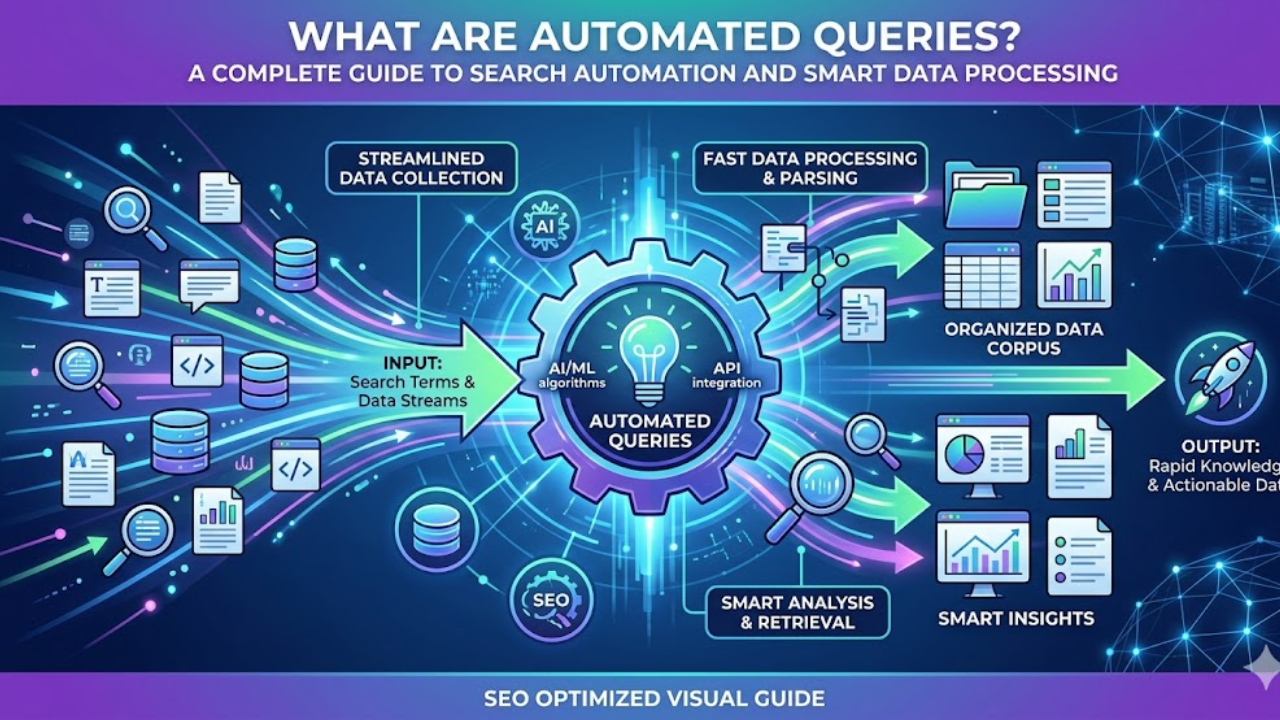
Digital technology has transformed the way businesses collect information, analyze data, and improve online performance. One topic becoming increasingly important in the world of SEO, artificial intelligence, and digital marketing is what are automated queries. These automated requests help software systems gather information without requiring manual searches by users. Businesses rely on this technology to improve productivity, reduce repetitive tasks, and monitor online activity in real time. From search engine optimization to customer analytics and cloud computing, automation is now deeply connected to modern business operations. Understanding how automated systems work can help companies improve efficiency while staying competitive in today’s fast-moving digital environment.
Understanding the Meaning of Automated Queries
To understand what are automated queries, it is important to first understand how digital queries function. A query is simply a request sent to a database, server, or search engine asking for specific information. Normally, people type these requests manually into search engines or software systems. Automated technology changes this process by allowing scripts, bots, or software applications to send requests automatically. This makes information collection much faster and more efficient than traditional manual methods.
Automated systems are designed to process large amounts of information within seconds. Businesses use them to monitor website rankings, collect analytics, track inventory, and analyze customer behaviour. Search engines, APIs, and cloud platforms also depend heavily on automation for efficient data handling. The rise of big data and artificial intelligence has increased the demand for these automated processes. Companies that use automation effectively often gain a strong competitive advantage in the digital marketplace.
How Automated Query Systems Work
Software and Scripts Behind Automation
When discussing what are automated queries, the technical process behind automation plays a major role. Automated systems use scripts, bots, or software programs to send requests directly to servers and databases. Once the request is received, the system processes it and returns the required information instantly. This process can happen continuously without any human involvement. Businesses often configure automation tools to collect information at scheduled intervals throughout the day.
Programming languages such as Python, JavaScript, and PHP are commonly used to build automated systems. Developers create scripts that can retrieve search engine rankings, website statistics, or customer data automatically. Many digital tools rely on cloud-based systems that operate around the clock. Because these systems work continuously, businesses can access updated information in real time. This speed and efficiency make automation highly valuable across many industries.
APIs and Automated Communication
APIs are another essential part of modern automation systems. APIs allow software applications to communicate with servers in a secure and structured way. Instead of manually visiting a website or database, software can request information directly through automated communication channels. This improves speed, accuracy, and reliability when processing large amounts of data.
Many online services provide APIs specifically for developers and businesses using automation tools. Social media platforms, search engines, and analytics services depend heavily on API technology. APIs also help reduce server overload because they are optimized for automated access. Businesses that use APIs responsibly can automate workflows while following platform policies and security standards. This approach creates safer and more efficient digital systems.
Importance of Automated Queries in SEO
Search Engine Optimization and Data Collection
One of the most important uses of what are automated queries is in the field of search engine optimization. SEO professionals use automated tools to monitor keyword rankings, analyze backlinks, and track competitor performance. Without automation, gathering this information manually would require a huge amount of time and effort. Automated systems help marketers collect accurate SEO data quickly and efficiently.
Keyword tracking software automatically checks search engine rankings multiple times each day. Website audit tools scan pages for technical problems such as broken links or slow loading speeds. Backlink monitoring platforms continuously track changes in link profiles and domain authority. This real-time information allows marketers to optimize strategies more effectively. Automation has become an essential part of modern SEO campaigns and digital marketing operations.
Real-Time Analytics and Reporting
Modern businesses rely heavily on real-time analytics to make informed decisions quickly. Automated reporting systems allow organizations to receive updated information instantly whenever changes occur. Marketers can monitor traffic, rankings, conversions, and user engagement without manually creating reports every day. Automated dashboards simplify complex data analysis and improve overall productivity.
Real-time reporting helps businesses identify trends and respond to market changes faster than competitors. Companies can monitor customer behavioir, campaign performance, and operational metrics from a single platform. Automation also improves consistency because reports are generated using standardized processes. These benefits make automated analytics tools extremely valuable for organizations focused on growth and performance optimization.
Benefits of Automated Data Processing
Faster Workflows and Better Productivity
Businesses invest in automation because it dramatically improves speed and productivity. Understanding what are automated queries helps organizations recognize how much time can be saved through automation. Manual data collection often requires hours of repetitive work, especially for companies handling large datasets. Automated systems can process the same information within minutes or seconds.
Employees can focus on strategic planning and creative tasks instead of repetitive administrative duties. This increases efficiency while reducing operational costs. Businesses also benefit from continuous monitoring because automated systems work around the clock without interruptions. Faster workflows allow organizations to respond quickly to changing customer demands and market conditions. Automation has become one of the most effective ways to improve operational performance.
Improved Accuracy and Consistency
Human error is one of the biggest challenges in manual data processing. Automated systems improve accuracy by following programmed instructions consistently every time they operate. Businesses can rely on automation to produce accurate reports, analytics, and performance data without common mistakes caused by manual entry.
Consistency is especially important for industries such as healthcare, finance, logistics, and e-commerce. Reliable information helps organizations make better business decisions and improve customer experiences. Automated systems also help maintain data quality across multiple departments and platforms. Accurate analytics are essential for forecasting, inventory management, and long-term business planning. High-quality automation tools support stronger decision-making across modern industries.
Industries That Depend on Automation
Business Intelligence and Analytics
Business intelligence platforms rely heavily on automated systems to process massive amounts of information. Organizations collect data from customer interactions, financial reports, sales records, and operational activities every day. Automated technology helps companies organize and analyze this information efficiently.
Executives use automated dashboards to monitor business performance in real time. Retail companies analyze customer purchasing patterns and inventory levels through automated reporting systems. Financial institutions use automation for fraud detection and transaction monitoring. Healthcare providers manage patient records and analytics using secure automated platforms. These technologies help businesses improve productivity and decision-making capabilities.
Artificial Intelligence and Smart Technologies
Artificial intelligence systems also depend on automation to process and analyze information continuously. AI-powered tools collect data from multiple sources to improve predictions and personalize user experiences. Search engines use intelligent systems to understand user intent and provide more relevant results. Streaming platforms and e-commerce websites also use automated data collection for recommendations and customer engagement.
Smart assistants, chatbots, and predictive analytics systems rely on continuous information processing. Businesses are increasingly combining AI with automation to improve customer support and operational efficiency. As technology continues evolving, intelligent automation will become even more advanced and widely used. The future of digital innovation is closely connected to automated systems and machine learning technologies.
Risks and Challenges of Automation
Ethical Concerns and Platform Restrictions
Although automation provides many benefits, there are also important challenges businesses must consider. Excessive automated requests can overload servers and negatively impact website performance. Search engines and online platforms often limit suspicious activity to protect users and maintain system stability.
Understanding what are automated queries also involves recognizing the importance of ethical practices. Businesses should use official APIs and avoid unauthorized scraping methods that violate platform rules. Responsible automation helps maintain trust between companies and digital platforms. Following ethical guidelines also reduces the risk of penalties, blocked access, or compliance issues. Sustainable automation requires careful management and proper technical practices.
Security and Data Privacy
Security remains one of the biggest concerns in automated systems. Many automation tools process sensitive customer information, financial records, or business analytics. Poor cybersecurity practices can expose organizations to hacking attempts and data breaches. Businesses must implement strong security measures to protect their systems and information.
Encryption, monitoring systems, and authentication protocols help improve automation security. Companies should regularly test their systems for vulnerabilities and ensure compliance with privacy regulations. Protecting customer data is essential for maintaining trust and avoiding legal complications. As automation continues expanding across industries, cybersecurity will remain a top priority for organizations worldwide.
The Future of Automated Technology
The future of what are automated queries is strongly connected to artificial intelligence, cloud computing, and big data technologies. Businesses increasingly require real-time information from multiple platforms and systems. Automated technology helps organizations process enormous datasets quickly and accurately. AI-powered automation tools are becoming smarter and more capable of handling complex tasks independently.
Industries such as healthcare, finance, education, logistics, and retail are rapidly adopting intelligent automation systems. Real-time analytics, predictive modeling, and automated customer support are becoming standard business practices. Companies that invest in automation today are more likely to succeed in the competitive digital economy. As technology advances, automated systems will continue transforming how businesses operate and interact with customers.
FAQs
1. What are automated queries used for?
Automated systems are used for SEO tracking, analytics, customer monitoring, business intelligence, and data processing. They help businesses collect information quickly and efficiently.
2. Are automated query systems important for SEO?
Yes, SEO professionals rely on automated tools for keyword tracking, backlink analysis, website audits, and competitor monitoring. These systems improve efficiency and reporting accuracy.
3. How do APIs support automation?
APIs allow software systems to communicate securely with servers and databases. They provide faster and more reliable automated access to information.
4. Can automation improve business productivity?
Automation reduces repetitive tasks, saves time, improves workflows, and increases operational efficiency across many industries.
5. Are there risks associated with automation?
Yes, risks include server overload, cybersecurity threats, data privacy issues, and potential violations of platform policies if used improperly.
6. Which industries use automated systems the most?
SEO, healthcare, finance, e-commerce, logistics, and artificial intelligence industries rely heavily on automation technologies.
7. What is the future of automation technology?
The future includes AI-powered automation, predictive analytics, real-time processing, and advanced intelligent systems that improve efficiency and decision-making.
Conclusion
Understanding what are automated queries is essential for businesses and professionals working in today’s digital world. Automated systems help organizations collect information faster, improve efficiency, and process large amounts of data without manual effort. From SEO monitoring and analytics to artificial intelligence and cloud computing, automation has become a core part of modern business operations. While these systems provide significant benefits such as speed, accuracy, and productivity, businesses must also focus on ethical practices and cybersecurity protection. As digital technology continues evolving, automation will remain one of the most powerful tools shaping the future of innovation and online success.
