


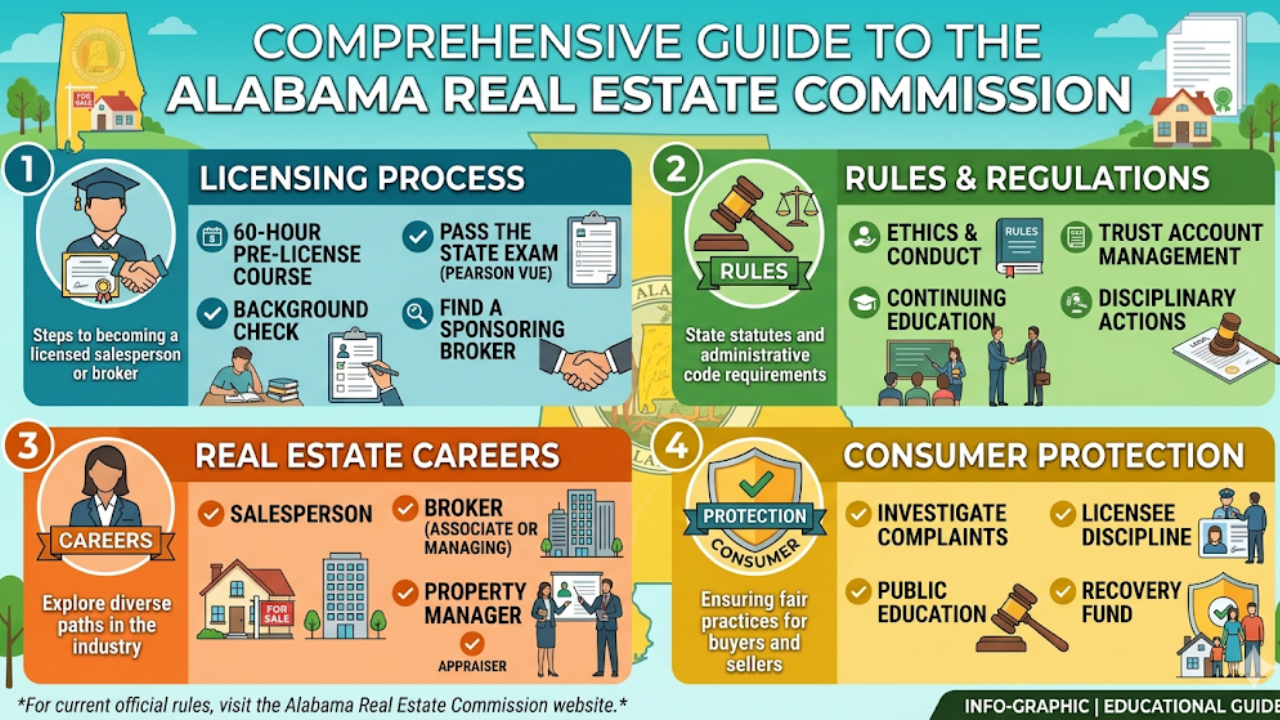
The alabama real estate commission is the official state agency responsible for regulating the real estate industry in Alabama. It plays a critical role in maintaining professional standards, issuing licenses, enforcing laws, and protecting consumers during property transactions. Whether someone wants to become a real estate agent, renew a broker license, invest in Alabama real estate, or understand housing regulations, the commission serves as the primary authority for guidance and compliance. In today’s competitive property market, understanding how the commission operates can provide valuable advantages for both professionals and consumers. The Alabama housing market continues to expand due to population growth, increasing property investments, and rising interest in residential and commercial real estate opportunities. Because of this ongoing growth, the commission’s responsibility has become even more important in ensuring transparency, ethical business practices, and trust within the industry.
The real estate industry involves complex legal agreements, financial negotiations, and long-term investments, making regulation essential for consumer safety. The alabama real estate commission creates standards that every licensed professional must follow in order to operate legally and ethically within the state. From educational requirements and licensing exams to disciplinary actions and continuing education, the commission oversees nearly every aspect of professional real estate activity. Buyers and sellers often rely on licensed agents to guide them through important financial decisions, which is why maintaining professional accountability is necessary. By monitoring industry conduct and enforcing strict standards, the commission helps reduce fraud, improve service quality, and strengthen confidence in Alabama’s property market. This combination of education, regulation, and consumer protection has made the commission a central pillar of the state’s real estate industry.
What Is the Alabama Real Estate Commission?
The alabama real estate commission is a state regulatory agency that oversees all licensed real estate activities throughout Alabama. Its main purpose is to ensure that real estate agents, brokers, and firms follow Alabama laws while providing fair and ethical services to the public. The commission establishes licensing standards, approves educational programs, administers examinations, and investigates complaints against professionals who violate regulations. Without this level of oversight, the real estate industry could face increased risks of fraud, misrepresentation, and unethical conduct. The commission’s role is designed to protect both consumers and professionals by creating a structured and legally compliant marketplace.
In addition to licensing and regulation, the commission also focuses heavily on consumer education and industry improvement. Many homebuyers and sellers are unfamiliar with legal procedures, contracts, inspections, financing terms, and disclosure requirements. The commission provides resources that help consumers better understand their rights and responsibilities during property transactions. By offering educational materials and monitoring professional conduct, the commission supports a transparent environment where buyers and sellers can make informed decisions. This commitment to public protection improves trust within the real estate market and contributes to the long-term stability of Alabama’s housing industry. As the market evolves, the commission continues adapting its policies to meet changing industry demands and technological advancements.
Why the Alabama Real Estate Commission Is Important
Protecting Consumers in Real Estate Transactions
One of the most important functions of the alabama real estate commission is protecting consumers from unethical or illegal business practices. Real estate transactions often involve large financial investments, making buyers and sellers vulnerable to fraud or misleading information if proper regulations are not enforced. The commission ensures that licensed professionals operate honestly, disclose accurate information, and follow all state laws during property transactions. This oversight helps reduce risks for consumers while promoting fairness throughout the industry. Buyers can feel more secure knowing that licensed professionals are held accountable for their actions.
The commission also provides a formal complaint and investigation process for consumers who experience problems with a real estate professional. Complaints related to fraud, false advertising, unethical conduct, or contract violations can be submitted directly to the commission for review. If violations are confirmed, disciplinary actions may include fines, license suspension, additional education requirements, or permanent revocation of a license. These enforcement measures create accountability and encourage professionals to maintain ethical standards. Consumer trust is essential for a healthy housing market, and the commission’s regulatory efforts play a major role in maintaining that trust across Alabama.
Maintaining Professional Standards
The alabama real estate commission also helps maintain professional standards within the industry by establishing licensing and educational requirements for agents and brokers. Real estate professionals must complete approved education courses and pass state examinations before they can legally practice in Alabama. These requirements ensure that every license holder understands property law, contracts, financing, ethics, and state regulations. The commission’s standards are designed to create knowledgeable professionals who can effectively guide clients through complex real estate transactions.
Continuing education is another major component of maintaining industry quality. Licensed professionals are required to complete ongoing training to stay informed about legal changes, housing trends, and evolving market conditions. This educational system encourages agents to improve their skills while adapting to industry developments. By promoting continuous learning and professional accountability, the commission strengthens the overall quality of real estate services provided throughout Alabama. Consumers benefit from working with professionals who are educated, experienced, and committed to ethical conduct.
How to Get a Real Estate License in Alabama
Education and Licensing Requirements
Anyone interested in starting a real estate career must follow the licensing procedures established by the alabama real estate commission. The process begins with completing an approved pre-license education course that covers essential industry topics such as real estate law, contracts, property valuation, ethics, financing, and agency relationships. These courses are designed to provide future agents with the foundational knowledge needed to represent buyers and sellers professionally. Education is a critical part of the licensing process because real estate transactions involve legal responsibilities and financial risks that require proper understanding.
After completing the required coursework, applicants must pass the Alabama real estate licensing examination. The exam tests knowledge of both national real estate principles and Alabama-specific laws. Passing this examination demonstrates that the applicant has the competency required to work in the industry. Once licensed, new agents are typically required to work under a licensed broker who provides supervision and practical guidance. This structured system helps new professionals gain real-world experience while continuing to develop their industry knowledge and communication skills.
Career Opportunities in Alabama Real Estate
The alabama real estate commission plays a significant role in supporting career opportunities within Alabama’s growing property market. Real estate offers a wide range of career paths, including residential sales, commercial property transactions, property management, luxury real estate, and real estate investment consulting. Alabama’s expanding housing market creates strong demand for knowledgeable agents who can assist buyers, sellers, and investors with property decisions. Successful real estate professionals often build long-term client relationships and develop strong reputations within their local communities.
Technology has also created new opportunities within the industry, allowing agents to market properties online, conduct virtual tours, and reach wider audiences through digital advertising. Professionals who stay updated on market trends and technological advancements can gain a competitive advantage in the industry. The commission’s focus on continuing education helps ensure that agents remain prepared for these changes. As Alabama’s housing market continues evolving, real estate professionals who combine strong communication skills, ethical conduct, and modern marketing strategies can achieve long-term success and financial growth.
The Role of the Alabama Real Estate Commission in Market Regulation
Enforcing Real Estate Laws and Ethics
The alabama real estate commission is responsible for enforcing state real estate laws and ensuring that professionals comply with ethical standards. Agents and brokers are expected to operate honestly, protect client interests, and provide accurate information during transactions. The commission investigates complaints involving fraud, contract violations, discrimination, false advertising, or mishandling of client funds. These investigations help identify unethical behavior and maintain accountability within the industry.
Disciplinary actions taken by the commission help preserve the integrity of Alabama’s real estate market. Professionals who violate regulations may face financial penalties, suspension, or permanent loss of their licenses. This strict enforcement system discourages unethical conduct and encourages agents to prioritize professionalism and transparency. Consumers benefit from a more reliable marketplace where licensed professionals are held to high standards of conduct and legal compliance.
Adapting to Modern Real Estate Trends
The real estate industry continues changing due to technological innovation and evolving consumer expectations, and the alabama real estate commission continues adapting to these developments. Digital property listings, electronic signatures, virtual tours, and online marketing have transformed the way properties are bought and sold. These tools provide greater convenience and accessibility for consumers while improving efficiency for real estate professionals. The commission supports these innovations while ensuring that all digital practices remain legally compliant and ethically responsible.
As remote work and online property searches become more common, the demand for digital real estate services is expected to continue increasing. Real estate professionals who embrace technology while maintaining compliance with commission regulations will likely remain competitive in the evolving market. The commission’s ability to modernize its systems and educational programs helps ensure that Alabama’s real estate industry remains current, secure, and consumer-focused. This balance between innovation and regulation supports the long-term growth of the state’s housing market.
Benefits of Working With Licensed Alabama Real Estate Professionals
Working with professionals regulated by the alabama real estate commission provides important benefits for buyers, sellers, and investors. Licensed agents understand Alabama property laws, market conditions, financing options, and negotiation strategies, helping clients make informed decisions. Real estate professionals also assist with paperwork, legal disclosures, inspections, and communication between all parties involved in a transaction. Their expertise can help reduce stress and avoid costly mistakes during the buying or selling process.
Licensed professionals are also required to follow ethical guidelines established by the commission, which creates additional protection for consumers. Buyers and sellers can verify an agent’s license status and review disciplinary history if necessary. This transparency helps consumers choose trustworthy professionals with confidence. The commission’s oversight encourages higher service standards and stronger accountability throughout the industry. As a result, consumers benefit from safer, smoother, and more professional real estate experiences.
FAQs
1. What does the Alabama Real Estate Commission do?
The alabama real estate commission regulates real estate professionals in Alabama by issuing licenses, enforcing laws, investigating complaints, and maintaining ethical standards in property transactions.
2. How can I get a real estate license in Alabama?
To get a license, applicants must complete approved pre-license education, pass the Alabama real estate exam, and meet all requirements established by the commission.
3. How often do Alabama real estate licenses need renewal?
Real estate licenses in Alabama typically require renewal every two years along with continuing education courses approved by the commission.
4. Can consumers file complaints against real estate agents?
Yes, consumers can submit complaints to the alabama real estate commission if they believe an agent or broker violated laws or acted unethically during a transaction.
5. Why is continuing education important for real estate agents?
Continuing education helps agents stay updated on market trends, legal changes, technology, and ethical standards required for professional real estate practice.
6. Does the Alabama Real Estate Commission regulate brokers and companies?
Yes, the commission regulates real estate brokers, salespersons, firms, and property-related businesses operating within Alabama.
7. How does the Alabama Real Estate Commission protect home buyers?
The commission protects home buyers by enforcing laws, monitoring professional conduct, investigating fraud, and ensuring licensed professionals follow ethical standards.
The alabama real estate commission serves as the foundation of Alabama’s real estate industry by regulating licensing, enforcing laws, maintaining professional standards, and protecting consumers during property transactions. Its role is essential for creating a transparent, ethical, and reliable marketplace where buyers, sellers, investors, and agents can operate confidently. From licensing education and continuing training to disciplinary enforcement and consumer protection, the commission influences every major aspect of Alabama real estate. As the housing market continues growing and technology reshapes the industry, the commission remains committed to supporting professionalism, innovation, and legal compliance. Understanding the role of the commission can help consumers make informed property decisions while helping aspiring agents build successful real estate careers in Alabama.
